What is Renewable Energy and Why It Matters Today
Renewable energy refers to energy derived from natural sources that are replenished continuously, such as sunlight, wind, water, and geothermal heat. Unlike fossil fuels, these resources are sustainable and generate significantly lower environmental impact.
In 2026, renewable energy is no longer just an environmental trend it is a core business strategy. Companies across the United States, United Kingdom, Canada, and Australia are investing heavily in clean energy to reduce operational costs, stabilize long term pricing, and comply with environmental regulations. Organizations like the International Energy Agency highlight that renewable energy is now the fastest growing electricity source globally, driven by falling costs and rapid technological innovation.
How Renewable Energy Works
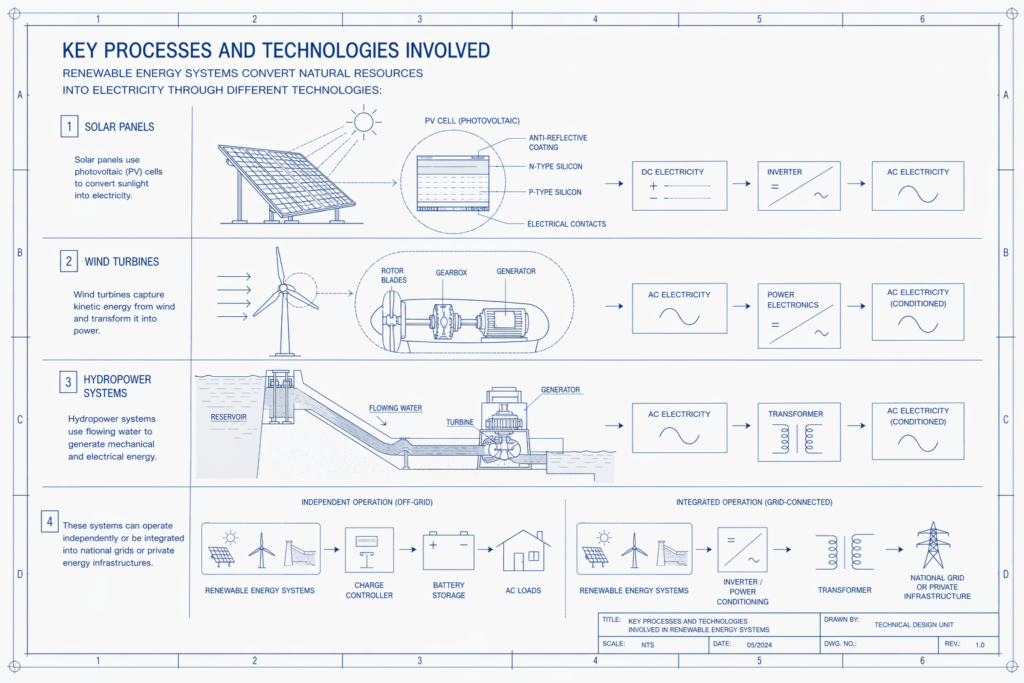
Key Processes and Technologies Involved
Renewable energy systems convert natural resources into electricity through different technologies:
- Solar panels use photovoltaic (PV) cells to convert sunlight into electricity
- Wind turbines capture kinetic energy from wind and transform it into power
- Hydropower systems use flowing water to generate mechanical and electrical energy
These systems can operate independently or be integrated into national grids or private energy infrastructures.
Real World Example of Implementation
A clear example is large scale deployment by NextEra Energy:
This company develops utility-scale solar and wind farms that power millions of homes and businesses while offering competitive pricing through Power Purchase Agreements (PPAs).
Types of Renewable Energy Technologies and Solutions
Renewable energy technologies have evolved into a diverse ecosystem of solutions capable of powering everything from small homes to entire industrial operations. Each technology has unique characteristics, cost structures, and ideal use cases.
Understanding these differences is essential for selecting the right energy strategy.
Solar Energy (Photovoltaic Systems)
Solar energy is the most widely adopted renewable solution worldwide. Companies like Maxeon Solar Technologies offer high efficiency panels used in residential, commercial, and industrial systems.
Key technologies
- Monocrystalline and polycrystalline panels
- Thin-film solar (used by First Solar)
- Battery storage systems
- Smart inverters (like those from SMA Solar Technology)
Applications
- Residential rooftops
- Commercial buildings
- Utility-scale solar farms
Advantages
- Highly scalable
- Low maintenance
- Rapid ROI
Limitations
- Intermittent production
- Requires storage for stability
Wind Energy (Onshore and Offshore)
Wind energy is one of the most cost-efficient solutions at scale. Leaders like Ørsted, specialize in offshore wind farms, which offer higher and more consistent energy output.
How it works: Wind turbines convert kinetic energy into mechanical energy, which is then transformed into electricity.
Key technologies
- Onshore turbines (lower cost)
- Offshore turbines (higher efficiency)
- AI-driven wind optimization systems
Companies like Ørsted lead offshore wind innovation.
Applications
- Utility scale power generation
- Industrial energy supply
Advantages
- Low cost per MWh
- High energy output
Limitations
- Location dependent
- Visual and environmental concerns
Hydropower (Hydroelectric Energy)
Hydropower remains one of the most reliable energy sources, while emerging technologies continue to expand the renewable ecosystem.
How it works: Flowing water spins turbines to generate electricity.
Types
- Large scale dams
- Run-of-river systems
- Micro-hydro installations
Applications
- National grids
- Industrial energy supply
Advantages
- Stable and continuous generation
- Long lifespan
Limitations
- High infrastructure cost
- Environmental impact on ecosystems
Geothermal Energy
Geothermal energy uses heat from the Earth’s interior to generate electricity or provide direct heating.
How it works: Heat from underground reservoirs produces steam, which drives turbines.
Technologies
- Dry steam plants
- Flash steam plants
- Binary cycle systems
Applications
- Industrial heating
- District heating systems
- Power generation
Advantages
- Constant energy output (baseload)
- Not weather dependent
Limitations
- Location-specific
- High initial drilling cost
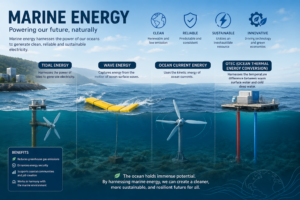
Tidal and Wave Energy (Marine Energy)
Marine energy is an emerging sector with strong long-term potential.
How it works:
- Tidal energy: Uses ocean tides to drive turbines
- Wave energy: Captures surface wave motion
tecnologies
- LTidal barrages
- Tidal stream generators
- Wave energy converters
Applications
- Coastal energy systems
- Grid-scale experimental projects
Advantages
- Highly predictable (tidal cycles)
- Large untapped potential
Limitations
- High development cost
- Limited commercial deployment
Biomass and Biogas Energy
Biomass energy converts organic material into usable energy.
How it works: Organic waste (agriculture, food, or forestry) is burned or processed to produce heat, electricity, or gas.
Types
- Biomass combustion
- Biogas (anaerobic digestion)
- Biofuels (ethanol, biodiesel)
Applications
- Industrial heating
- Waste to energy plants
- Agricultural operations
Advantages
- Reduces waste
- Provides continuous energy
Limitations
- Emissions (lower than fossil fuels but not zero) Supply chain dependency
Energy Storage and Hybrid Systems (Critical Layer)
Although not a generation source, energy storage is essential for renewable systems.
Technologies
- Lithium ion batteries
- Grid-scale storage systems
- Hydrogen energy storage
Applications
- Stabilizing intermittent energy
- Backup power systems
Importance
Without storage, renewable energy cannot scale efficiently for business applications.
Cost of Renewable Energy
Average Cost for Small Scale Projects
- Residential solar: $2.5–$4 per watt
- Small business installations: $50,000–$250,000+
Industrial or Large-Scale Costs
- Utility-scale solar: $0.20–$0.30/Wp
- Wind energy: $20–$60/MWh
- Offshore wind: $40–$70/MWh
Developers like Invenergy operate heavily in this segment.
Cost Factors
- Equipment and technology
- Installation and engineering
- Maintenance and lifecycle costs
- Government incentives and regulation
ROI and Payback Period
- Commercial solar: 3–7 years
- Industrial projects: 5–12 years
Best Renewable Energy Solutions, Technologies or Companies
Global Renewable Energy Companies by Country
| Country | Company | Main Renewable Types | Target Sector | Estimated Pricing |
|---|---|---|---|---|
| USA | NextEra Energy | Wind, Solar, Storage | Utilities, Corporations, Industrial | 20–40 USD/MWh |
| USA | Maxeon Solar Technologies | Solar | Residential, SMEs | 2.5–4 USD/Wp |
| USA | Invenergy | Wind, Solar | Industrial, Utilities | 20–40 USD/MWh |
| UK | Ørsted | Offshore Wind | Governments, Utilities | 40–70 EUR/MWh |
| UK | SSE Renewables | Wind, Hydro | Public Sector, Industry | 30–60 EUR/MWh |
| UK | Octopus Energy | Mixed Renewables | Residential, SMEs | Market-based |
| Canada | Brookfield Renewable Partners | Hydro, Wind, Solar | Corporations | 30–60 CAD/MWh |
| Canada | TransAlta Corporation | Wind, Solar | Industrial | 35–60 CAD/MWh |
| Canada | Canadian Solar | Solar | Utility Projects | 0.8–1.2 USD/Wp |
| Germany | Siemens Gamesa | Wind | Utilities | 1,200–5,000 EUR/kW |
| Germany | E.ON | Multi-energy | Residential, Industry | Variable |
| Germany | RWE Renewables | Wind, Solar | Industrial | 30–60 EUR/MWh |
| Australia | Iberdrola | Wind | Corporations | 30–60 AUD/MWh |
| Australia | First Solar | Solar | Utility-scale | 0.20–0.30 USD/Wp |
| Australia | SMA Solar Technology | Inverters | Industrial | 0.05–0.10 USD/Wp |
Renewable Energy Solutions Breakdown
Solar Panel Systems
Best For: Residential, SMEs, commercial buildings
Key Features: PV modules, storage integration, smart systems
Advantages: Low maintenance, scalable
Disadvantages: Weather dependent
Estimated Cost: $2.5–$4/Wp
Wind Turbine Systems
Best For: Industrial and utility-scale
Key Features: High capacity turbines, AI optimization
Advantages: Low cost per MWh
Disadvantages: High upfront cost
Estimated Cost: $1,200–$5,000/kW
Hydropower Solutions
Best For: Long-term infrastructure
Key Features: Continuous energy output
Advantages: Reliable, stable
Disadvantages: Environmental impact
Estimated Cost: $1,500–$3,000/kW
Applications of Renewable Energy by Industry
- Manufacturing: reducing operational energy costs
- Construction: sustainable buildings
- Energy sector: grid transformation
- Environmental projects: carbon reduction
Benefits of Renewable Energy
Environmental Benefits
Renewable energy delivers extensive environmental advantages:
- Significant reduction in greenhouse gas emissions
- Improved air quality and public health
- Minimal water usage compared to fossil fuels
- Reduced environmental destruction from mining
- Protection of ecosystems with proper planning
- Elimination of toxic waste generation
- Climate change mitigation
- Long-term sustainability of energy resources
- Lower corporate carbon footprint
- Decentralized energy production reducing system vulnerability
Recommended: environmental footprint
Economic Benefits
- Lower long-term energy costs
- Stable pricing
- Job creation
- Increased asset value
Challenges and Limitations
- High upfront investment
- Intermittency
- Infrastructure needs
- Regulatory complexity
How to Choose the Right Solution
Choosing the right renewable energy solution is not just about technology it’s about aligning your budget, energy consumption, and long-term business goals.
Making the wrong decision can lead to higher costs, inefficiencies, or poor ROI. The right choice, however, can reduce energy expenses by up to 70% over time.
Based on Budget
- Low budget: Solar panels or green energy providers like Octopus Energy
- Medium budget: Solar + battery systems or small wind turbines
- High budget: Utility-scale solar, wind farms, or infrastructure projects with providers like NextEra Energy
Tip: Solar is usually the fastest ROI option.
Based on Scale
- Small-scale (homes / small business): Solar systems, green electricity plans
- Commercial: Rooftop solar + storage
- Industrial: Wind, hydropower, or hybrid systems
Larger scale = lower cost per unit of energy.
On Location
- Sunny regions → Solar energy
- Windy areas → Wind power
- Coastal zones → Offshore wind or tidal
- Geothermal zones → Geothermal energy
Companies like Ørsted optimize energy production based on location.
On Business Goals
- Cost reduction: Solar or PPAs
- Energy independence: Hybrid systems + storage
- Sustainability (ESG): 100% renewable sourcing
Choosing the Right Provider
When comparing providers:
✔ Pricing model (fixed vs variable)
✔ Contract length (PPA)
✔ Technology used
✔ Support & maintenance
Providers like RWE Renewables and E.ON offer full-service solutions.
Frequently Asked Questions (FAQ)
How much does renewable energy cost?
Costs vary by technology:
- Solar: $0.20–$4/Wp
- Wind: $20–$60/MWh
- Offshore wind: up to $70/MWh
Is renewable energy worth it?
Yes , it reduces energy costs, improves sustainability, and delivers ROI in 3–7 years for most businesses.
What is the best renewable energy solution?
- Small business → Solar
- Industrial → Wind or hybrid systems
- Large-scale → Hydropower or PPAs
What are the main benefits of renewable energy?
- Lower energy costs
- Reduced emissions
- Energy independence
- Regulatory compliance