What Is the Energy Transition?
Definition and Scope
The energy transition refers to the long term, structural transformation of global energy systems from a fossil fuel based model (coal, oil, and natural gas) toward one dominated by low carbon and zero carbon energy sources.
It is not merely a technological substitution. The energy transition involves profound changes across:
- Energy production, transmission, storage, and consumption
- Economic and industrial systems
- Regulatory and institutional frameworks
- Social behavior and energy use patterns
Historically, energy transitions have occurred before (wood to coal, coal to oil). However, the current energy transition is faster, deliberate, and driven by environmental and climatic limits, rather than solely by economic efficiency.
Why Is the Energy Transition Necessary?
Climate Change and Emissions Reduction
The combustion of fossil fuels accounts for roughly three quarters of global greenhouse gas emissions. Without a rapid energy transition, limiting global warming to internationally agreed thresholds becomes unattainable.
Environmental Impacts
Beyond climate change, fossil energy systems generate severe environmental damage, including:
- Air and water pollution
- Ecosystem degradation
- Soil contamination
- Biodiversity loss
The energy transition reduces these impacts by replacing polluting energy sources with cleaner alternatives.
Energy Security and Geopolitics
Reducing dependence on imported fossil fuels strengthens energy security, lowers exposure to price volatility, and mitigates geopolitical risks linked to supply disruptions, conflicts, and sanctions.
Public Health and Economic Stability
Cleaner energy systems significantly reduce premature deaths linked to air pollution while fostering:
- Job creation
- Technological innovation
- Long term economic resilience
Global Objectives of the Energy Transition
Climate Neutrality and Net Zero
Many countries have committed to achieving net zero carbon emissions by mid century. This means balancing remaining emissions with carbon sinks or removal technologies.
Climate Scenarios and Carbon Budgets
Scientific climate scenarios (1.5 °C and 2 °C pathways) define carbon budgets the maximum amount of CO₂ humanity can emit without exceeding critical temperature thresholds. Current trajectories exceed these limits without accelerated action.
Key Technologies Driving the Energy Transition
Renewable Energy Generation
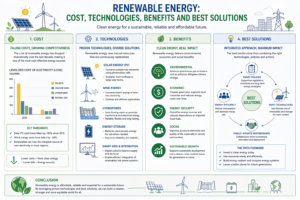
- Solar energy (photovoltaic, solar thermal, concentrated solar power)
- Wind energy (onshore and offshore)
- Hydropower, with environmental and social constraints
- Bioenergy and advanced biofuels, with sustainability safeguards
Nuclear Energy
Low carbon nuclear power remains controversial but relevant due to its ability to provide stable, large scale electricity generation with minimal operational emissions.
Energy Storage Technologies
Energy storage is essential for integrating variable renewable sources:
- Lithium ion and next generation batteries (solid state, sodium ion)
- Pumped hydro storage
- Thermal energy storage
- Compressed air energy storage
Carbon Batteries (CO₂ Batteries)
Carbon dioxide batteries, also known as CO₂ batteries, are an emerging energy storage technology that uses compressed carbon dioxide in a closed system to store and release electricity.
Key characteristics:
- Function as long duration energy storage
- Enhance grid flexibility and renewable integration
- Do not capture atmospheric CO₂, but reuse it as a working fluid
- Still in early stage commercial deployment
Their role in the energy transition is supportive and experimental, complementing mature storage technologies rather than replacing them.
Hydrogen and Low Carbon Fuels
- Green hydrogen produced via renewable electrolysis
- Blue hydrogen combined with carbon capture
- Synthetic fuels for industry and heavy transport
Carbon Capture, Utilization, and Storage (CCUS)
CCUS technologies aim to reduce emissions in hard to abate sectors, though concerns remain regarding cost, scalability, and long term reliance on fossil fuels.
Electrification of the Economy
Electrification replaces direct fossil fuel use with clean electricity, becoming the backbone of the energy transition.
Key sectors include:
- Transportation (electric vehicles, rail systems)
- Buildings (heat pumps, electric heating and cooling)
- Industry (electric furnaces, electrochemical processes)
Where direct electrification is not feasible, hydrogen and synthetic fuels play a complementary role.
The Energy Transition by Sector
- Power Generation
The electricity sector leads decarbonization through renewables, grid expansion, and digital control systems. - Transportation
Electric mobility dominates light vehicles, while biofuels and hydrogen target aviation, shipping, and heavy transport. - Industry
Steel, cement, and chemicals require deep technological shifts, including electrification and hydrogen based processes. - Buildings and Agriculture
Energy efficiency, thermal retrofitting, and electrification reduce emissions while lowering long term energy costs.
Power Grids and Digitalization
A successful energy transition depends on modern, flexible, and intelligent grids, supported by:
- Smart meters
- Demand side management
- Artificial intelligence and data analytics
- Regional and cross border interconnections
Economics, Investment, and Public Policy
Investment and Green Finance
The energy transition requires trillions of dollars annually in infrastructure, innovation, and system upgrades. Green bonds, sustainable finance frameworks, and development banks play a critical role.
Regulation and Energy Policy
Effective policies include:
- Carbon pricing mechanisms
- Removal of fossil fuel subsidies
- Renewable energy incentives
- Long term national energy planning
Social Impacts and a Just Transition
A just energy transition ensures that workers and communities dependent on fossil industries are supported through:
- Job retraining
- Economic diversification
- Inclusive decision making
Addressing energy poverty remains essential, especially in developing economies.
Geopolitics, Critical Minerals, and Risks
The transition introduces new dependencies on critical minerals such as lithium, cobalt, nickel, copper, and rare earth elements. Sustainable mining, recycling, and circular economy strategies are vital to reduce environmental and social risks.
The Future of the Energy Transition
The 2020s represent a decisive decade. Without rapid acceleration, climate targets will become unreachable. Despite challenges, the energy transition is no longer optional it is an inevitable structural transformation of the global economy.
A Structural Transformation of the Global Energy System
The energy transition reshapes how energy is produced, distributed, and consumed worldwide. Its success will determine not only climate stability, but also economic resilience, public health, and geopolitical balance in the decades ahead.