In today’s sustainability-driven world, choosing the best carbon accounting software is no longer optional, it’s essential. Companies worldwide are under increasing pressure to track, reduce, and report their carbon footprint accurately. This guide will help you navigate the top carbon accounting platforms and make the right choice for your organization.
What is Carbon Accounting Software and Why it Matters
Benefits of Using Carbon Accounting Software
Using a dedicated carbon accounting platform allows your business to:
- Track emissions accurately across operations.
- Generate reliable sustainability reports for investors and regulators.
- Identify reduction opportunities to cut costs and carbon output.
- Align with ESG goals and global climate standards.
How It Helps Meet Sustainability and ESG Objectives
Companies implementing carbon accounting software benefit from better decision-making, stronger brand reputation, and improved compliance with frameworks like GHG Protocol or Science Based Targets initiative (SBTi).
You may be interested: Best ESG Reporting Software for SEC and CSRD Compliance in 2026
Key Factors to Consider When Choosing a Carbon Accounting Platform
Selecting the right carbon accounting software requires evaluating:
Integration with Existing Systems
Ensure the platform integrates with your ERP, CRM, and energy management tools, allowing seamless data flow and avoiding duplicate entries.
Ease of Use and Scalability
A user friendly interface with scalable features ensures adoption across teams without extensive training.
Pricing and Subscription Models
From subscription based SaaS to enterprise licenses, choose a pricing model that fits your company’s size and growth plans.
Security and Regulatory Compliance
Look for platforms that offer data encryption, user access control, and adherence to compliance frameworks like ISO 14064.
Top Carbon Accounting Software 2026: Comparison
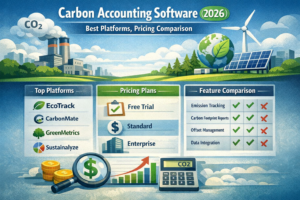
| Software | Features | Pricing | Ideal For |
|---|---|---|---|
| Plana Earth | Full emissions tracking, integrations, reporting dashboards | Custom pricing | SMEs & Enterprises |
| Climate Partner | ESG alignment, supply chain tracking | Subscription based | Corporations with global operations |
| HHC Earth | User friendly, implementation support | Tiered plans | SMEs looking for simplicity |
| Carbon Maps | Industry specific guides, real-time data | Custom | Industry focused organizations |
Pros and Cons of Each Platform
- Plana Earth – Pros: Comprehensive dashboards; Cons: Steeper learning curve.
- Climate Partner – Pros: Strong ESG alignment; Cons: Higher cost for small companies.
- HHC Earth – Pros: Easy adoption; Cons: Limited advanced analytics.
- Carbon Maps – Pros: Industry-focused insights; Cons: Less flexible for SMEs.
Recommendations by Company Type
- SMEs: HHC Earth for simplicity and cost-effectiveness.
- Large Enterprises: Climate Partner or Plana Earth for robust integrations and ESG reporting.
- Industry Specific Needs: Carbon Maps for tailored solutions.
You may be interested: Best Carbon Accounting Software by Company Size
Use Cases and Best Practices
How Different Industries Use Carbon Accounting Software
- Manufacturing: Track emissions from production and supply chains.
- Tech Companies: Monitor energy consumption of data centers.
- Retail: Measure Scope 3 emissions across suppliers.
Reporting and Monitoring Examples
- Monthly dashboards showing emissions trends.
- Automated reporting for regulatory compliance and investor updates.
Frequently Asked Questions
What Should I Look for in the Best Carbon Accounting Software?
Focus on integration, scalability, pricing, reporting capabilities, and regulatory compliance.
How Does Carbon Accounting Software Differ from Platforms?
Software often focuses on calculation and tracking; platforms offer full ecosystem services, including ESG reporting and supplier engagement.
What Are Average Costs and ROI?
Pricing varies: SaaS subscriptions from $50–$500/month for SMEs, while enterprise solutions can reach $10,000+/year. ROI is seen in energy cost reduction, regulatory compliance, and improved ESG ratings.
Conclusion
Choosing the best carbon accounting software ensures your company not only meets sustainability targets but also gains a competitive advantage. Evaluate your needs, industry requirements, and budget, and select a platform that scales with your growth.