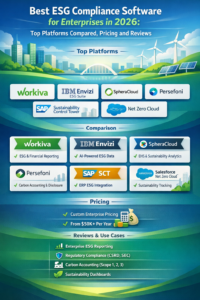
Environmental, Social, and Governance (ESG) reporting has become a critical priority for companies worldwide. According to industry analysts, over 90% of S&P 500 companies now publish ESG disclosures, and new regulations such as CSRD and climate disclosure rules are increasing compliance pressure. As a result, businesses are increasingly adopting ESG software solutions and enterprise ESG platforms to automate reporting, track carbon emissions, and manage sustainability data more efficiently.
ESG Software solutions Comparison
| ESG Platform | Best For | Key Capabilities | Pricing |
|---|---|---|---|
| Sweep | Carbon management | AI ESG data collection, Scope 1–3 tracking, CSRD/SFDR reporting | Custom |
| Workiva | Enterprise ESG reporting | Collaborative ESG & financial reporting, audit-ready frameworks | $31k–$145k |
| Prophix ESG | ESG financial planning | ESG performance tracking, financial integration, sustainability reporting | Custom enterprise pricing |
| Persefoni | Carbon accounting | AI carbon tracking, Scope 3 reporting, supplier engagement | Free plan + custom |
| Sphera Cloud | ESG compliance | Risk management, sustainability tracking, EHS integration | ~$17k |
| EcoVadis | Supply chain ESG | Supplier sustainability ratings and benchmarking | $500–$11k |
| Intelex | ESG + EHS platform | ESG analytics, compliance monitoring, mobile reporting | $44/user/month |
| Benchmark Gensuite | ESG risk management | ESG dashboards, operational risk analytics | Custom |
| Watershed | Net-zero strategies | Carbon measurement and reduction analytics | Custom |
| Normative | Carbon accounting | Scope 3 emissions visibility and climate reporting | Custom |
| Enablon | Enterprise ESG governance | Risk management, ESG compliance tools | Custom |
Recommended: Best ESG Software Platforms in 2026
What Are ESG Software Solutions?
ESG software solutions are digital platforms designed to help organizations collect, analyze, and report environmental, social, and governance data. These enterprise platforms allow companies to monitor sustainability performance, automate regulatory reporting, and align corporate strategies with global ESG frameworks.
Modern ESG management platforms integrate data from multiple business systems including finance software, supply chain tools, and operational analytics platforms. This enables companies to maintain a single source of truth for ESG metrics, making reporting more transparent and auditable.
For many organizations, ESG software is now essential to meet regulatory requirements and investor expectations related to corporate sustainability.
Key capabilities typically include:
- ESG data collection and management
- carbon emissions tracking (Scope 1, 2, and 3)
- automated sustainability reporting
- supply chain ESG evaluation
- risk and compliance monitoring
- ESG performance dashboards
By centralizing sustainability data, ESG software enables organizations to improve transparency, manage risk, and demonstrate measurable progress toward sustainability goals
Regulatory Landscape Driving ESG Software Adoption
One of the main drivers behind ESG software adoption is the rapid expansion of global sustainability regulations.
Companies operating internationally must now comply with a growing number of regulatory frameworks that require accurate and auditable ESG disclosures.
Major ESG regulatory frameworks include:
SEC Climate Disclosure Rules
The U.S. Securities and Exchange Commission has introduced climate disclosure requirements that obligate publicly traded companies to report greenhouse gas emissions and climate-related risks.
CSRD (Corporate Sustainability Reporting Directive)
The European Union’s CSRD regulation significantly expands ESG reporting obligations for companies operating in Europe. Thousands of organizations must now disclose detailed sustainability information annually.
GHG Protocol
The Greenhouse Gas Protocol is the global standard for measuring and reporting carbon emissions. Most ESG software platforms integrate GHG Protocol calculations for Scope 1, Scope 2, and Scope 3 emissions.
EU Taxonomy and Sustainable Finance Regulations
Financial institutions must now evaluate the environmental impact of investments using EU taxonomy classifications.
Because these frameworks require extensive data collection and verification, many organizations rely on enterprise ESG software platforms to automate compliance and reduce reporting risk.
Why Companies Need Enterprise ESG Platforms
Organizations adopt enterprise ESG software for several strategic reasons.
Regulatory compliance
New ESG regulations require companies to disclose climate and sustainability data.
Carbon emissions tracking
Businesses must track Scope 1, Scope 2, and Scope 3 emissions to meet climate goals.
Investor transparency
Investors increasingly evaluate ESG performance when making funding decisions.
Supply chain sustainability
Companies must assess ESG risks across their supplier networks.
Enterprise ESG platforms allow organizations to automate compliance reporting while improving sustainability decision-making.
Core Features of Enterprise ESG Software Platforms
Enterprise ESG platforms provide a wide range of capabilities designed to support corporate sustainability programs.
| Feature | Description | Business Value |
|---|---|---|
| ESG Data Collection | Aggregates sustainability metrics across business units | Centralized ESG management |
| Carbon Tracking | Calculates Scope 1, 2, and 3 emissions | Climate transparency |
| Automated ESG Reporting | Generates regulatory reports | Compliance efficiency |
| Data Integration | Connects ERP and analytics systems | Reliable ESG data |
| Risk & Compliance Monitoring | Identifies ESG risks | Governance improvement |
| ESG Analytics Dashboards | Visualizes sustainability KPIs | Strategic decision making |
These features allow organizations to transition from manual spreadsheets to fully automated sustainability management systems.
Best ESG Software Solutions
Below is a detailed comparison of the leading ESG software platforms used by enterprises worldwide. Each platform provides different strengths, including carbon accounting, regulatory compliance, supply chain sustainability monitoring, and enterprise ESG reporting.
Sweep
Sweep is a modern ESG and carbon management platform designed to help organizations track emissions, manage sustainability data, and meet global climate regulations.
It is particularly popular among companies working toward net-zero targets and decarbonization strategies.
Best For
Companies focusing on carbon accounting and climate impact reduction.
Key Services & Features
- AI-powered ESG data collection
- Scope 1, Scope 2, and Scope 3 emissions tracking
- CSRD and SFDR compliance reporting
- supply chain sustainability monitoring
- customizable ESG surveys
- carbon reduction analytics
Pricing
Sweep uses custom enterprise pricing, typically depending on:
- company size
- number of integrations
- supply chain complexity
Pros
- strong carbon accounting capabilities
- advanced climate analytics dashboards
- scalable enterprise architecture
Cons
- pricing not publicly disclosed
- implementation may require data integration setup
Official Website: Sweep ; Demo
Workiva
Workiva is one of the most widely used enterprise ESG reporting and compliance platforms, combining sustainability reporting with financial reporting tools.
Large corporations rely on Workiva to manage audit-ready ESG disclosures and regulatory filings.
Best For
Large enterprises requiring integrated ESG and financial reporting.
Key Services & Features
- collaborative ESG and financial reporting
- audit-ready documentation
- built-in compliance frameworks
- automated sustainability reporting workflows
- real-time data collaboration
Pricing
Estimated annual pricing ranges between:
$31,000 – $145,000 per year
(median around $59k depending on company size)
Pros
- industry-leading reporting collaboration tools
- highly trusted by enterprise finance teams
- strong regulatory compliance features
Cons
- higher pricing compared with smaller ESG platforms
- may be complex for small companies
Official Website: Workiva ; Demo
Persefoni
Persefoni is an ESG platform specialized in carbon accounting and climate data management, designed to help companies measure and report emissions according to global standards.
The platform is particularly attractive to small and mid-sized organizations beginning their ESG journey.
Best For
Companies starting with carbon footprint tracking and sustainability reporting.
Key Services & Features
- AI-powered carbon accounting platform
- Scope 1, Scope 2, and Scope 3 emissions tracking
- supplier engagement tools
- regulatory reporting frameworks
- climate analytics dashboards
Pricing
Persefoni offers:
- Free PRO starter plan
- custom pricing for enterprise versions
Pros
- free entry-level plan available
- strong carbon accounting features
- user-friendly interface
Cons
- advanced enterprise features require premium plan
- limited supply chain analytics compared to some competitors
Official Website: persefoni
Prophix ESG
Best for
Organizations that need integrated ESG reporting combined with financial planning and performance management.
Pricing overview
Prophix uses enterprise SaaS pricing, typically customized depending on:
- organization size
- number of ESG frameworks
- data integrations
Key features
- ESG reporting dashboards
- sustainability performance tracking
- financial planning integration
- compliance reporting tools
- ESG data consolidation
Pros
- strong integration with financial planning
- enterprise-grade analytics
- centralized ESG reporting environment
Cons
- pricing transparency limited
- implementation may require integration work
Official Website: prophix ; demo
Sphera Cloud
Sphera Cloud is a powerful sustainability and risk management platform used by industrial organizations and heavily regulated sectors.
It combines ESG reporting with EHS (Environmental, Health, and Safety) management systems.
Best For
Industries with complex environmental compliance requirements.
Key Services & Features
- ESG reporting and analytics
- EHS risk management
- sustainability performance tracking
- environmental compliance management
- advanced risk assessment tools
Pricing
Average contracts are estimated around:
$17,000 annually, though enterprise pricing may vary.
Pros
- strong compliance capabilities
- integrated sustainability and risk management
- ideal for regulated industries
Cons
- interface can be complex
- setup requires enterprise onboarding
Official Website:sphera : contact
Demo:
EcoVadis
EcoVadis is one of the most recognized platforms for supplier sustainability ratings and ESG supply chain assessments.
Thousands of organizations use EcoVadis to monitor sustainability performance across global supply chains.
Best For
Companies managing large supplier networks and ESG supply chain risk.
Key Services & Features
- supplier ESG scorecards
- sustainability assessments
- supply chain risk analysis
- compliance monitoring
- sustainability benchmarking
Pricing
Estimated annual pricing:
$500 – $11,000 depending on organization size
Pros
- widely recognized ESG supplier rating system
- strong supply chain sustainability insights
- accessible pricing tiers
Cons
- less focused on carbon accounting
- reporting features more limited than enterprise ESG platforms
Official Website: EcoVadis
Intelex
Intelex provides a unified ESG and EHS management platform designed for organizations that want to integrate sustainability data with environmental and safety performance metrics.
Best For
Mid-sized organizations seeking integrated ESG and safety management systems.
Key Services & Features
- ESG and EHS management
- customizable reporting dashboards
- mobile ESG data collection
- advanced analytics tools
- compliance tracking
Pricing
Starts at approximately:
$44 per user per month (minimum 25 users)
Pros
- flexible modular platform
- strong analytics capabilities
- mobile-friendly reporting tools
Cons
- pricing may increase with user count
- some integrations require customization
Official Website: intelex
Benchmark Gensuite
Benchmark Gensuite offers a comprehensive platform combining ESG, EHS, and operational risk management with real-time analytics dashboards.
Best For
Organizations requiring integrated ESG and risk management solutions.
Key Services & Features
- ESG data management
- operational risk monitoring
- AI-powered analytics dashboards
- sustainability performance reporting
Pricing
Enterprise custom pricing depending on deployment scope.
Pros
- powerful integrated risk and ESG platform
- strong real-time analytics
- scalable enterprise architecture
Cons
- pricing transparency limited
- may require training for new users
Official Website: benchmarkgensuite
Watershed
Watershed is a modern carbon management platform helping organizations measure, reduce, and report greenhouse gas emissions.
Best For
Companies pursuing net-zero and carbon reduction strategies.
Key Services & Features
- emissions tracking and reporting
- climate data analytics
- reduction strategy insights
- alignment with Paris Agreement targets
Pricing
Enterprise custom pricing depending on company size.
Pros
- advanced carbon analytics
- strong climate reporting capabilities
- modern data visualization tools
Cons
- limited supply chain sustainability features
- pricing not publicly available
Official Website: Watershed
Normative
Normative focuses on carbon accounting and emissions transparency, helping companies calculate and reduce their carbon footprint.
Best For
Organizations prioritizing carbon accounting and Scope 3 emissions reporting.
Key Services & Features
- carbon footprint measurement
- Scope 3 emissions visibility
- supplier emissions calculators
- climate reporting tools
Pricing
Enterprise custom pricing.
Pros
- strong focus on carbon accounting
- supplier emissions tools
- climate impact analytics
Cons
- narrower feature set than full ESG platforms
- fewer enterprise integrations
Official Website: Normative
Enablon
Enablon is a comprehensive enterprise ESG and risk management platform used by large multinational organizations.
Best For
Large enterprises requiring advanced ESG governance and compliance tools.
Key Services & Features
- ESG performance management
- environmental risk management
- compliance monitoring
- sustainability reporting frameworks
Pricing
Enterprise custom pricing depending on organization size.
Pros
- extremely powerful enterprise capabilities
- strong governance and compliance features
- scalable global platform
Cons
- high implementation complexity
- enterprise-level pricing
Official Website: Enablon
Comparison by Use Case
Different organizations require different ESG tools depending on their industry, size, and sustainability goals.
Small and Medium-Sized Businesses
SMEs often prioritize affordable pricing and easy deployment.
Recommended platforms include:
- Persefoni – offers a free starter plan for carbon accounting
- EcoVadis – ideal for supplier sustainability assessments
- Intelex – flexible pricing model suitable for mid-sized teams
These tools allow companies to start their ESG journey without major upfront investment.
Large Enterprises
Large corporations require scalable ESG platforms capable of handling complex data environments and regulatory audits.
Recommended platforms:
- Workiva – enterprise reporting and financial integration
- Sphera Cloud – advanced sustainability and risk management platform
These solutions provide robust compliance capabilities for organizations with global reporting obligations.
Benefits of ESG Software for Enterprises
Enterprise ESG software provides several business advantages.
- Improved compliance
- Automates reporting for frameworks like CSRD and GHG Protocol.
- Data transparency
- Centralizes ESG metrics across business units.
- Risk management
- Identifies environmental and governance risks early.
- Sustainability insights
- Provides analytics to support climate and ESG strategies.
ESG Software vs Manual Reporting
Many companies previously relied on spreadsheets for ESG reporting.
However, manual processes often lead to:
- inconsistent data
- reporting errors
- compliance risks
Modern ESG software platforms provide automated reporting and real-time analytics, making them significantly more reliable.
ESG Software Pricing Comparison
| Platform | Pricing Model | Estimated Cost |
|---|---|---|
| Workiva | Enterprise SaaS | $31k – $145k annually |
| EcoVadis | Subscription | $500 – $11k annually |
| Intelex | Per-user pricing | $44 per user per month |
| Sphera | Enterprise contract | ~$17k average |
Pricing for enterprise ESG platforms often depends on factors such as:
- company size
- number of reporting frameworks
- data integrations
- supplier network size
Many vendors provide custom enterprise pricing models based on organizational requirements.
How to Choose the Right ESG Software
When selecting an ESG platform, companies should evaluate several factors.
Regulatory requirements
Does the platform support CSRD, GHG Protocol, or other ESG frameworks?
Data integration
The software should integrate with ERP and financial systems.
Carbon tracking capabilities
Companies pursuing sustainability goals need advanced emissions tracking tools.
Pricing and scalability
The platform should support long-term growth and future reporting requirements.
Final Comparison: Best ESG Software
| Category | Best Platform |
|---|---|
| Best Overall ESG Platform | Workiva |
| Best Carbon Management Platform | Sweep |
| Best Supply Chain ESG Tool | EcoVadis |
| Best Enterprise ESG Solution | Enablon |
| Best ESG Software for SMEs | Persefoni |
FAQ About ESG Software Solutions
What is ESG software used for?
ESG software helps companies track sustainability metrics, manage carbon emissions, and generate regulatory compliance reports.
How much does ESG software cost?
Pricing ranges from approximately $500 annually for smaller solutions to more than $100,000 per year for enterprise ESG platforms.
What is the best ESG software platform?
Leading ESG platforms include Workiva, Sweep, EcoVadis, Persefoni, and Sphera Cloud.
What features should ESG software include?
Key features include carbon emissions tracking, automated reporting, ESG analytics dashboards, and supply chain sustainability assessments.
Why are companies adopting ESG software?
Companies are adopting ESG software to comply with regulations, improve transparency, and manage sustainability risks more effectively.
Conclusion
As sustainability reporting becomes a strategic priority for organizations worldwide, ESG software solutions are rapidly becoming essential tools for corporate governance and environmental management.
Enterprise ESG platforms enable companies to centralize sustainability data, automate complex reporting processes, and align business strategies with global climate and governance standards.
Organizations seeking robust ESG reporting capabilities often rely on platforms like Workiva or Enablon, while companies focused on carbon management may prefer specialized solutions such as Sweep or Watershed.
Ultimately, selecting the right ESG software platform depends on a company’s regulatory obligations, operational complexity, and long-term sustainability goals. Businesses that invest in the right ESG technology today will be better positioned to navigate the evolving regulatory landscape and demonstrate measurable progress toward sustainable growth.