Carbon credits have become one of the most powerful financial tools in global climate policy. Whether you’re researching the carbon offset market, considering how to buy carbon offsets, or evaluating Verra carbon credits, understanding how this system works is essential.
In this guide, I’ll break down:
- What carbon credits are
- How compliance and voluntary markets operate
- How to evaluate quality and certification
- How to buy carbon credits safely
- Market trends, projections, and commercial opportunities
What Are Carbon Credits?
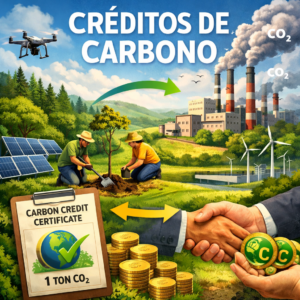
Carbon credits are certificates that represent one metric ton of carbon dioxide (or the equivalent amount of another greenhouse gas) that has been prevented, reduced, or removed from the atmosphere.
They are generated through a wide range of initiatives, such as renewable energy projects, energy efficiency improvements, carbon capture and storage, reforestation efforts, and sustainable land management practices.
Organizations and businesses purchase and trade carbon credits to offset emissions they cannot fully eliminate on their own. In many cases, they are also used as part of broader climate commitments, including carbon neutrality or net zero goals.
Carbon credits (also called carbon offset credits or carbon allowances) represent the verified reduction or removal of one metric ton of CO₂ equivalent (CO₂e) from the atmosphere.
Each credit is:
- Unique
- Measurable
- Permanent
- Verified by an independent third party
When companies purchase and retire carbon credits, they claim that reduction against their own emissions. This mechanism monetizes carbon mitigation.
How Carbon Credits Are Created
Carbon credits originate from projects that either:
- Avoid emissions (renewables, efficiency, methane capture)
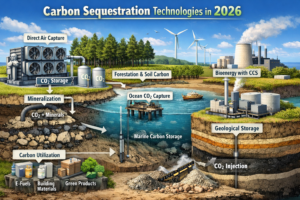
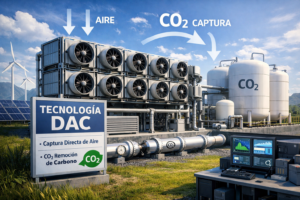
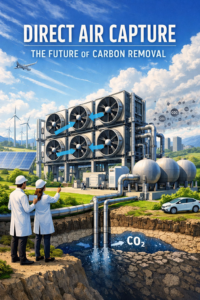
- Remove carbon (reforestation, soil carbon, direct air capture)
Projects must:
- Establish a baseline scenario.
- Prove additionality.
- Undergo third party verification.
- Register credits in official registries.
Leading registries include:
- Verra (Verified Carbon Standard – VCS)
- Gold Standard
- American Carbon Registry
How the Carbon Offset Market Works
There are two primary carbon markets:
1️⃣ Compliance (Regulated) Carbon Markets
These operate under cap and trade systems.
A governing body sets an emissions cap and issues allowances equal to that limit. Companies must hold allowances equal to their emissions.
One of the largest examples is the EU Emissions Trading System under the European Union, covering roughly 36% of EU emissions.
How Cap and Trade Works
| Step | Description |
|---|---|
| Cap Set | Authority defines total emission limit |
| Allowances Issued | 1 allowance = 1 ton CO₂e |
| Trading Begins | Companies buy/sell based on needs |
| Compliance | Companies surrender allowances equal to emissions |
These markets are mandatory and policy driven.
2️⃣ Voluntary Carbon Market (VCM)
The voluntary carbon market allows companies and individuals to buy carbon offsets beyond regulatory requirements.
This is where most corporate net zero strategies operate.
Unlike compliance markets:
- No global cap
- Participation is optional
- Credits come from certified projects
According to MSCI, the voluntary carbon market remained around $1.4 billion in primary value in 2025, with projections reaching $20B+ by 2030 under strong demand scenarios.
Compliance vs Voluntary Carbon Markets
| Feature | Compliance Market | Voluntary Carbon Market |
|---|---|---|
| Mandatory? | Yes | No |
| Governed by law | Yes | No |
| Examples | EU ETS, California Cap-and-Trade | Verra, Gold Standard credits |
| Price Drivers | Regulation & policy | Corporate ESG demand |
| Buyers | Regulated emitters | Corporations, airlines, ESG funds |
Types of Carbon Credits
Understanding credit type is essential when navigating the carbon offset market.
1️⃣ Avoidance / Reduction Credits
These prevent emissions from occurring.
Examples:
- Wind & solar farms
- Energy efficiency
- Methane capture
2️⃣ Removal Credits (CDR)
These remove CO₂ already in the atmosphere.
Examples:
- Reforestation
- Soil carbon sequestration
- Direct Air Capture
Removal credits typically command premium pricing due to durability.
REDD+ Carbon Credits
REDD+ (Reducing Emissions from Deforestation and Forest Degradation) credits focus on protecting forests.
Many Verra carbon credits fall into this category.
They generate:
- Carbon mitigation
- Biodiversity protection
- Social co-benefits
These are often called forest carbon credits.
Verra Carbon Credits
Verified Carbon Standard is the largest voluntary carbon registry globally.
It certifies:
- REDD+ projects
- Renewable energy
- Industrial efficiency
- Agriculture and land use
When someone refers to «Verra carbon credits,» they typically mean credits issued under VCS.
Indigo Carbon & Regenerative Agriculture
Indigo Ag runs Indigo Carbon, a program focused on soil carbon sequestration through regenerative farming.
These credits fall into the removal category and are increasingly attractive to corporations seeking durable offsets.
Carbon Exchanges Comparison
| Platform | Focus | Technology | Market |
|---|---|---|---|
| AirCarbon Exchange | Digital carbon trading | Blockchain | Voluntary |
| Climate Impact X | Institutional contracts | Auction model | Voluntary |
| Carbon Trade Exchange | Spot trading | Registry-linked | Global |
Who Buys Carbon Credits?
According to 2025 market data:
- Energy & utilities represent ~50% of voluntary credit retirements.
- Airlines purchase under CORSIA.
- Financial institutions buy for ESG positioning.
- Heavy industry uses compliance allowances.
Corporate demand increasingly favors high-quality removal credits over low-cost avoidance credits.
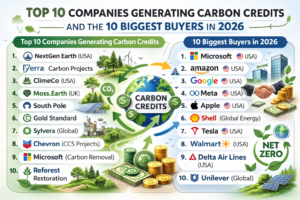
Read: Top 10 Companies Generating Carbon Credits and the 10 Biggest Buyers in 2026
Carbon Offset Market Trends (2025–2050)
Current Snapshot
- ~$1.4B primary voluntary market
- ~294M credits issued in 2025
- ~202M retired
- Oversupply nearing 1B unretired credits globally
The World Bank reports that 28% of global emissions are now covered by carbon pricing mechanisms.
Are Carbon Credits a Real Climate Solution?
Carbon credits are not a substitute for emissions reduction.
However, when:
- Properly verified
- Transparently traded
- High integrity certified
They function as a capital allocation tool directing billions into decarbonization projects.
The market is maturing. Buyers now prioritize:
- Transparency
- Additionality
- Durability
- Co-benefits
As scrutiny increases, quality will define long term value.
READ:
Conclusion
Carbon credits are no longer niche financial instruments. They are central to corporate climate strategy and ESG positioning.
Understanding:
- How the carbon offset market works
- The difference between avoidance and removal
- How to buy carbon offsets safely
- The role of Verra carbon credits
- Emerging players like Indigo Carbon
is essential for navigating this rapidly expanding market.
The next decade will likely separate low-integrity credits from high quality, institution grade carbon assets.
FAQs
- What are carbon credits?
- They are tradable certificates representing one metric ton of CO₂ reduced or removed.
- Is the carbon offset market regulated?
- Compliance markets are regulated; voluntary markets are not globally regulated but use certification standards.
- Are Verra carbon credits reliable?
- They are widely used and certified under the Verified Carbon Standard framework.
- What are REDD+ carbon credits?
- Credits generated from forest conservation projects preventing deforestation.
- How do I buy carbon offsets?
- Through exchanges, brokers, or directly from certified projects.