What is Carbon Management Software?
Carbon management software is a digital platform that helps organizations measure, track, and reduce greenhouse gas (GHG) emissions across operations, supply chains, and products. It provides companies with the tools to calculate their carbon footprint, comply with regulations like CSRD or SEC climate disclosures, and align with frameworks such as the GHG Protocol.
By centralizing sustainability data, these platforms allow businesses to move towards net zero targets, improve transparency, and enhance stakeholder trust.
Key Functionalities: Carbon Emission Management Software y Emissions Tracking Software
Modern carbon management platforms go far beyond simple reporting. Their core functionalities include:
- Carbon emission management software capabilities: Measure direct (Scope 1), indirect (Scope 2), and value-chain (Scope 3) emissions in line with global standards.
- Emissions tracking software: Real time monitoring of energy use, fuel consumption, logistics, and purchased goods.
- Carbon accounting software features: Financial integration to calculate the cost of emissions, enabling better investment decisions.
- Sustainability management: Tools for tracking ESG performance, supply chain transparency, and risk management.
- Regulatory compliance automation: Built in frameworks for CSRD, SEC rules, and GHG Protocol alignment.
- Scenario modeling: Simulate reduction strategies and forecast carbon budgets.
- Automated reporting: Export ready to use sustainability reports for investors, clients, and auditors.
👉 In practice, these functions turn complex sustainability data into actionable insights that drive both compliance and competitive advantage.
Key Benefits of Carbon Management Software
Beyond tracking and reporting, carbon management software delivers clear business and environmental value:
- Regulatory compliance → Stay aligned with GHG Protocol, CSRD, and SEC requirements.
- Cost savings → Identify inefficiencies in energy and resource use, reducing expenses.
- Risk management → Anticipate climate-related risks and avoid financial penalties.
- Reputation & brand value → Demonstrate commitment to sustainability, strengthening customer and investor trust.
- Investor attraction → Sustainability focused investors prefer transparent, carbon conscious companies.
- Operational efficiency → Centralize data and streamline reporting, saving time and resources.
- Competitive advantage → Early adopters gain credibility and differentiation in the market.
Recommended: Best Carbon Management Software in 2026
Differences Between Carbon Accounting and Emissions Tracking
Although often used interchangeably, these concepts are different:
- Carbon accounting software = financial style record of emissions, connecting sustainability data with business operations.
- Emissions tracking software = operational monitoring in real time, essential for identifying inefficiencies and reduction opportunities.
Smart companies use both to build robust carbon strategies.
Best Carbon Management Software in 2025
Several platforms lead the way in 2025. Based on features, market adoption, and innovation, the top players include:
1. Persefoni
Known as the “ERP for carbon,” Persefoni is a market leader offering enterprise grade carbon accounting and emissions management tools.
2. Sweep
Sweep stands out for its collaborative approach, enabling companies to involve suppliers and employees in emission reduction plans.
3. Plan A
Plan A combines AI powered emissions tracking software with reporting features tailored for SMEs and multinationals alike.
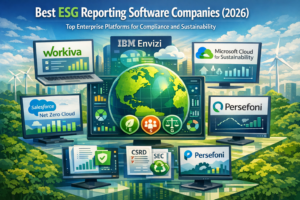
4. IBM Envizi
IBM Envizi integrates carbon management with enterprise ESG reporting, a powerful option for large organizations.
(Other notable platforms: Sphera, Net Zero Cloud, Greenly, FigBytes.)
How to Choose the Right Carbon Management Software
When evaluating options, consider:
- Scalability: Can it manage both current and future reporting needs?
- Data integration: Does it connect with ERP, HR, and supply chain systems?
- Regulatory alignment: Is it updated for GHG Protocol, CSRD, SEC climate rules?
- User experience: Is it accessible to both sustainability teams and non-technical staff?
- Cost vs ROI: Does it provide measurable financial and reputational value?
Recommended: Best Carbon Management Software in 2026
Future Trends in Carbon Management Software
By 2025 and beyond, carbon management platforms will evolve with:
- AI driven forecasting to predict carbon hotspots.
- Blockchain based supply chain transparency.
- IoT sensors for real time data capture.
- Automated ESG disclosures aligned with international taxonomies.
- Integration with financial markets, linking carbon reduction directly to credit ratings and capital access.
These innovations will make carbon management software not just a compliance tool, but a strategic driver of profitability and resilience.
Frequently Asked Questions
1. What is carbon management software and how does it work?
It collects sustainability data, calculates GHG emissions, and generates compliance ready reports.
2. What is the difference between carbon accounting software and emissions tracking software?
Accounting = financial view; tracking = operational monitoring. Both are complementary.
3. Who should use carbon emission management software?
Any business with regulatory exposure, international supply chains, or net-zero commitments.
4. How does carbon management software help with compliance?
By aligning data with frameworks like CSRD, SEC, and GHG Protocol, avoiding fines and reputational risks.
5. What are the top platforms in 2025?
Persefoni, Sweep, Plan A, and IBM Envizi are leading the market.