Urban flooding, climate change, and increasing water scarcity are pushing cities to rethink traditional infrastructure. Enter sponge cities: a revolutionary approach to urban planning that transforms urban landscapes into efficient, water-absorbing ecosystems. This guide covers everything businesses, investors, and city planners need to know about sponge cities from costs and technologies to real-world solutions and ROI.
What is Sponge Cities and Why It Matters Today
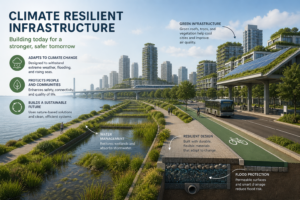
A sponge city is an urban area designed to absorb, store, and reuse rainwater using natural systems. Unlike traditional cities, which channel rainwater away through concrete drains, sponge cities leverage:
- Permeable surfaces
- Green roofs and vegetated rooftops
- Urban wetlands
- Rainwater harvesting systems
By mimicking natural ecosystems, sponge cities reduce urban flooding, improve water quality, and increase urban resilience against climate change.
Why Businesses and Governments Are Investing in Sponge Cities
Flooding costs in major cities now exceed billions annually. Governments and businesses are investing in sponge city infrastructure because:
- Reduced insurance claims and flood damage costs
- Increased property values near green infrastructure
- Alignment with ESG and climate adaptation goals
- Access to green bonds and climate finance
Cities like Singapore, Rotterdam, and Wuhan demonstrate the long-term economic and environmental benefits of adopting this model.
Comparative Table: Traditional Cities vs Sponge Cities
| Feature | Traditional Cities | Sponge Cities |
|---|---|---|
| Water management | Drainage systems | Absorption & reuse |
| Flood risk | High | Significantly reduced |
| Infrastructure | Concrete-heavy | Green & permeable |
| Climate resilience | Low | High |
| Sustainability | Limited | Advanced |
| Long-term cost | Increasing | Cost-efficient over time |
How Sponge Cities Works (Step-by-Step Explanation)
Key Processes and Technologies Involved
Sponge cities integrate multiple layers of water management:
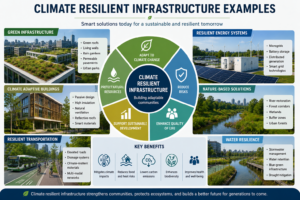
- Natural Water Absorption Systems – Soil, vegetation, and water bodies absorb rainwater, reducing runoff and flood risks.
- Green Infrastructure – Parks, green corridors, and vegetated rooftops act as natural sponges.
- Core Components:
- Permeable pavements
- Bioswales
- Retention ponds
- Constructed wetlands
These combined systems create a multi-layered approach that enhances both urban resilience and livability.
Real World Example of Implementation
China’s national Sponge City Program has transformed cities like Wuhan and Shenzhen, achieving up to 70% rainwater absorption in pilot zones. Singapore, Copenhagen, and Rotterdam have successfully implemented sponge infrastructure to mitigate flood risks while enhancing urban green spaces.
Types of Sponge Cities Technologies and Solutions
Permeable Surfaces and Pavements
Permeable pavements allow water to infiltrate the ground, reducing surface runoff and replenishing aquifers.
Green Roofs and Vegetation Based Systems
Vegetated rooftops and green corridors absorb rainwater and filter pollutants, creating cooling effects and reducing urban heat islands.
Water Retention and Recycling Systems
Retention ponds, constructed wetlands, and rainwater harvesting systems store water for reuse in irrigation, cleaning, or industrial processes, increasing water efficiency.
Cost of Sponge Cities
Average Cost for Small-Scale Projects
Small urban projects typically range $10M–$50M, covering green roofs, bioswales, and local retention systems.
Industrial or Large Scale Costs
Large metropolitan transformations can exceed $500M, incorporating city-wide wetland networks, permeable streets, and smart water management technology.
Cost Factors (Materials, Installation, Maintenance)
Key cost drivers include:
- Land acquisition and construction
- Installation of advanced filtration and storage systems
- Maintenance and monitoring (lower than traditional drainage systems)
ROI and Payback Period
While initial investments are higher, sponge cities provide lower lifecycle costs and higher property values, with payback periods often realized within 5–10 years through reduced flood damage and operational savings.
Best Sponge Cities Solutions, Technologies or Companies
| Solution/Technology | Best For | Cost | Efficiency | Application |
|---|---|---|---|---|
| Green Roof Systems | Urban Residential | $200–$400 per sq. ft | High | Rainwater absorption, cooling |
| Permeable Pavements | Commercial Streets | $25–$50 per sq. ft | Medium-High | Flood reduction, stormwater infiltration |
| Smart Retention Ponds | Municipal Projects | $2M–$20M | Very High | Industrial and city-wide water management |
| Constructed Wetlands | Eco-districts | $1M–$15M | High | Water quality improvement, biodiversity |
Green Roof Systems
Best For
Urban residential and commercial buildings
Key Features
Absorbs rainfall, filters air pollutants, reduces heat island effect
Advantages and Disadvantages
- High absorption capacity
– High initial cost and structural reinforcement needed
Estimated Cost
$200–$400 per sq. ft
Permeable Pavements
Best For
City streets and parking lots
Key Features
Allows water infiltration, reduces runoff, easy integration
Advantages and Disadvantages
- Scalable
– Maintenance required to avoid clogging
Estimated Cost
$25–$50 per sq. ft
Applications of Sponge Cities by Industry
Manufacturing Industry
Reduces flooding risks in industrial zones and protects critical machinery.
Energy Sector
Manages stormwater around renewable energy plants and substations.
Construction or Infrastructure
Integrates sustainable water management in urban development and transportation projects.
Environmental Projects
Restores wetlands, improves biodiversity, and enhances ecosystem services.
Benefits of Sponge Cities
Environmental Benefits
- Reduced flooding and urban runoff
- Enhanced biodiversity and green spaces
- Improved air and water quality
Economic Benefits
- Lower long-term infrastructure costs
- Higher property values
- Reduced disaster recovery spending
Regulatory and Compliance Advantages
- Alignment with UN SDGs
- Meets ESG investment criteria
- Supports local climate adaptation policies
Regulatory and Policy Context
Government Policies in China
China mandates sponge city principles in urban development, supported by national funding programs.
International Urban Planning Regulations
Many countries are integrating:
- Green building standards
- Climate adaptation policies
- Sustainable infrastructure guidelines
Sustainability Standards
Sponge cities align with:
- ESG criteria
- UN Sustainable Development Goals
- Climate resilience frameworks
Challenges and Limitations of Sponge Cities
- Technical Challenges: Complex engineering and integration with existing urban infrastructure.
- Financial Barriers: High upfront investment and planning requirements.
- Regulatory Issues: Requires policy support and zoning adjustments to allow green infrastructure.
How to Choose the Right Sponge Cities Solution
Based on Budget
Select technologies like permeable pavements for smaller budgets; large-scale projects can integrate smart ponds and wetlands.
Based on Scale (Small vs Industrial)
Consider modular solutions for small urban districts; full-scale implementation for metropolitan areas.
Based on Environmental Goals
Focus on biodiversity, stormwater management, or heat island mitigation depending on city priorities.
Real Case Studies or Examples
- China’s Sponge City Program
- Pilot zones in Wuhan absorb 70% of rainwater, reducing flood damage significantly.
- Singapore’s Marina Barrage & Rotterdam’s Water Squares
- Both demonstrate measurable improvements in flood control, water reuse, and urban livability.
FAQs
How much does Sponge Cities cost?
$10M–$500M depending on project scale and technology.
Is Sponge Cities worth it?
Yes, due to long-term savings, increased property value, and climate resilience.
What is the best solution available?
Depends on goals; green roofs and permeable pavements for small projects, retention ponds and wetlands for large-scale.
What are the main benefits?
Flood prevention, sustainability, regulatory compliance, and economic efficiency.
Final Verdict: Is Sponge Cities a Good Investment?
Best Option for Low Budget
Permeable pavements and modular green roofs.
Best Option for Large Projects
Integrated wetlands, retention ponds, and city-wide green corridors.
Most Efficient Solution Overall
Combination of green infrastructure with smart water management technology ensures maximum ROI and resilience.