Environmental compliance is no longer optional.
For companies operating in the USA, UK, Canada, Australia, Brasil and more countries, failing to manage environmental data properly can lead to:
- Regulatory fines
- Delayed permits
- Costly rework
- ESG reporting inaccuracies
- Reputational damage
Manual spreadsheets, scattered reports, and disconnected GIS tools create operational bottlenecks that silently drain budgets.
This is where environmental management software becomes critical.
Modern environmental data management software centralizes compliance, automates reporting, integrates GIS, and enables life carbon analysis all from a single source of truth.
What Is Environmental Management Software?

Environmental management software (EMS software) is a digital system that helps organizations monitor, track, and optimize their environmental performance.
It typically includes:
- Environmental compliance management
- Emissions tracking
- Carbon accounting software modules
- ESG data management
- Permit tracking
- Environmental impact assessment tools
- Life cycle assessment (LCA) integration
- GIS based environmental analysis
While some platforms focus on compliance (EHS software), others specialize in environmental data management software, meaning structured environmental datasets, reporting automation, and regulatory transparency.
EMS vs Environmental Data Management Software vs EHS
| Category | Primary Focus | Typical Users |
|---|---|---|
| Environmental Management Software | Compliance + sustainability oversight | Enterprise, utilities, construction |
| Environmental Data Management Software | Data aggregation & reporting | ESG teams, analysts |
| EHS Software | Safety + environmental compliance | Manufacturing, industrial |
| LCA Software | Product level carbon footprinting | Automotive, construction |
Understanding these distinctions is critical before choosing a platform.
Recommended: Best Environmental Data Management Software
Top 5 Best Environmental Management Software Platforms (2026 Comparison)
Below is a high intent commercial comparison of leading platforms dominating the environmental software market.
1️⃣ ArcGIS : Best GIS Based Environmental Analysis Platform
ArcGIS is widely used for environmental impact assessment and spatial compliance analysis.
Best for: Organizations requiring geospatial precision and environmental constraint mapping:
- Key Features
- Advanced GIS modeling
- Habitat and floodplain overlays
- Environmental risk mapping
- Cloud based dashboards
- Carbon tracking integration
- Strengths
- Industry leading spatial analytics
- Strong regulatory mapping capabilities
- Widely adopted in North America and Europe
- Weaknesses
- Requires GIS expertise
- Pricing can be enterprise-level
- Estimated Cost
- Enterprise pricing (custom licensing).
2️⃣ Enablon (Wolters Kluwer): Best Enterprise Environmental Compliance Software
Enablon is a powerful EHS and sustainability management platform.
Best for: Large corporations with complex multi site operations.
- Key Features
- ISO 14001 compliance tracking
- Air/water emission reporting
- GHG accounting
- Audit and permit workflows
- ESG dashboards
- Strengths
- Enterprise grade reliability
- Strong integration ecosystem
- Global compliance coverage
- Weaknesses
- Implementation complexity
- High upfront cost
3️⃣ SimaPro Best Life Cycle Assessment Software
SimaPro is one of the most established LCA tools in the world.
Best for: Product carbon footprinting and environmental product declarations.
- Key Features
- ISO 14040/44 compliant
- Large LCA databases
- Scenario modeling
- Supply chain carbon impact analysis
- Strengths
- Scientific robustness
- Trusted by global manufacturers
- Weaknesses
- Not a full EMS system
- Primarily LCA-focused
4️⃣ One Click LCA: Best for Construction & Green Building
Popular in the UK, US, and Nordic countries.
Best for: Architects and contractors seeking automated EPD and BREEAM/LEED compliance.
Key Features
- Building LCA automation
- EPD generation
- Green building certification support
- Cloud platform
5️⃣ Pivvot: Best for Site Planning & Environmental Risk Screening
Pivvot excels in rapid environmental screening for infrastructure projects.
Key Features
- Floodplain detection
- Species habitat identification
- Permit flagging
- GIS based risk alerts
Ideal for utilities and pipeline development.
Comparison Table
| Software | Best For | Cloud-Based | GIS Integration | LCA | Enterprise Compliance |
|---|---|---|---|---|---|
| ArcGIS | Spatial analysis | Yes | Yes | Limited | Moderate |
| Enablon | Enterprise compliance | Yes | Limited | No | High |
| SimaPro | LCA modeling | Desktop/Cloud | No | Yes | Low |
| One Click LCA | Construction LCA | Yes | Limited | Yes | Moderate |
| Pivvot | Risk screening | Yes | Yes | No | Moderate |
Key Technical Capabilities That Matter in 2026
1. Centralized Environmental Data Platforms
The best environmental data management software creates:
- A unified compliance database
- Automated report generation
- Real-time dashboards
- Audit ready documentation
This eliminates spreadsheet chaos and reduces audit risk.
2. GIS & Spatial Intelligence
Geospatial data integration allows:
- Floodplain modeling
- Protected habitat detection
- Air dispersion mapping
- Infrastructure risk visualization
For infrastructure heavy industries, GIS capability is non negotiable.
3. Automation & Smart Reporting
Modern platforms now include:
- Auto generated regulatory reports
- Emissions calculation engines
- Digital environmental scoping tools
- AI assisted impact screening
Automation directly reduces labor cost.
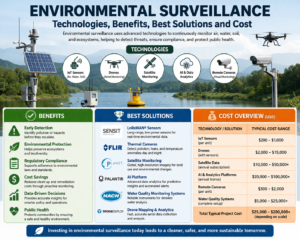
How Much Does Environmental Management Software Cost?
Pricing varies widely:
- Small business solutions: $5,000–$15,000 annually
- Mid-market platforms: $20,000–$75,000 per year
- Enterprise deployments: $100,000+ annually
Factors affecting price:
- Number of facilities
- Data complexity
- GIS integration
- Carbon accounting modules
- Custom compliance workflows
ROI: Is Environmental Management Software Worth It?
Let’s break it down.
Financial ROI
Potential savings include:
- Reduced regulatory fines
- Faster permit approvals
- Lower consulting costs
- Reduced manual reporting labor
- Avoided environmental litigation
A mediumsized utility saving one major compliance penalty ($250,000+) can justify multi-year software costs instantly.
Operational ROI
- 30–50% reduction in manual reporting time
- Faster environmental screening (minutes instead of weeks)
- Improved cross-team transparency
For regulated industries, ROI is often indirect but substantial.
Pros and Cons
- Advantages
- Improved regulatory compliance
- Stronger ESG reporting
- Reduced audit risk
- Data-driven decision making
- Competitive sustainability positioning
- Disadvantages
- High upfront investment
- Implementation complexity
- Requires training and data governance
Is It Worth It?
If your organization:
- Operates across multiple jurisdictions
- Faces strict environmental regulation
- Reports ESG metrics publicly
- Manages infrastructure or construction projects
- Needs carbon accounting transparency
Then environmental management software is not just worth it, it becomes a strategic necessity.
For small operations with limited compliance exposure, lightweight solutions may suffice.
Frequently Asked Questions
What is the best environmental management software in 2026?
It depends on use case. ArcGIS dominates spatial analysis, Enablon leads enterprise compliance, and SimaPro excels in life cycle assessment.
How much does environmental data management software cost?
Costs range from $5,000 to over $100,000 annually depending on enterprise scale and integrations.
Is environmental management software required for ISO 14001?
Not required, but it significantly simplifies documentation and audit readiness.
What’s the difference between EMS and ESG software?
EMS focuses on operational environmental compliance. ESG software includes governance and investor reporting layers.
Can environmental software reduce compliance risk?
Yes, automated tracking and digital evidence significantly reduce audit exposure.
Conclusion
Environmental management software is no longer a luxury tool for sustainability departments.
It is now a mission-critical operational platform for organizations that want to:
- Avoid regulatory penalties
- Accelerate project approvals
- Improve ESG performance
- Make data driven environmental decisions
The right platform depends on your industry, regulatory exposure, and data complexity, but investing in a structured environmental data management system is one of the smartest long term operational decisions companies can make in 2026.
If you’re evaluating solutions, begin with a feature comparison and request enterprise demos to calculate projected ROI before deployment.