The environmental impact of farming has become one of the most critical global issues in 2026. From greenhouse gas emissions to water pollution and deforestation, modern agriculture is both essential and environmentally costly. At the same time, new technologies and sustainable practices are transforming how farming operates, creating high value investment opportunities and cost saving solutions.
What Is the Environmental Impact of Farming?
The environmental impact of farming refers to how agricultural activities affect the planet’s natural systems, including air, water, soil, and biodiversity.
At first glance, farming seems essential and it is. But modern agriculture, especially large scale industrial farming, comes with hidden environmental costs that are often overlooked.
These impacts include:
- Greenhouse gas emissions
- Water overuse and contamination
- Soil degradation
- Deforestation
- Loss of biodiversity
Understanding these effects is critical not just for policymakers, but for consumers, businesses, and anyone interested in sustainability.
Main Environmental Effects of Agriculture
Greenhouse Gas Emissions and Climate Change
Agriculture is one of the largest contributors to greenhouse gas emissions globally.
Key sources include:
- Methane from livestock
- Nitrous oxide from fertilizers
- Carbon dioxide from land use changes
These emissions significantly contribute to climate change, making farming both a victim and a driver of environmental shifts.
👉 Why this matters:
Climate instability directly affects crop yields, food prices, and global supply chains.
Land Use and Deforestation
Farming is the leading cause of deforestation worldwide, especially for:
- Livestock grazing
- Feed crop production
When forests are cleared:
- Carbon stored in trees is released
- Wildlife habitats are destroyed
- Ecosystems collapse
👉 Key insight:
More than food production, land efficiency is becoming one of the biggest sustainability challenges.
Water Consumption and Pollution
Agriculture uses around 70% of global freshwater resources.
Problems include:
- Over irrigation
- Water depletion
- Runoff from fertilizers and pesticides
This leads to:
- Contaminated rivers and lakes
- Dead zones in oceans
- Unsafe drinking water
👉 High impact takeaway:
Water intensive farming is one of the most unsustainable practices in modern agriculture.
Soil Degradation and Erosion
Healthy soil is the foundation of food production but modern farming is destroying it.
Causes:
- Overuse of chemical fertilizers
- Monocropping
- Intensive tilling
Effects:
- Loss of soil fertility
- Increased erosion
- Reduced crop yields over time
👉 Critical fact:
Without healthy soil, long-term food security is at risk.
Loss of Biodiversity
Farming has a massive impact on biodiversity loss.
Main drivers:
- Habitat destruction
- Pesticide use
- Monoculture farming
This reduces:
- Pollinators like bees
- Natural pest control systems
- Ecosystem resilience
👉 Why it matters:
Less biodiversity means weaker ecosystems and more fragile food systems.
Why Modern Farming Has a Greater Environmental Impact
Not all farming is equally harmful.
Industrial agriculture amplifies environmental damage due to:
- Heavy chemical use
- High livestock density
- Mechanization and fossil fuel dependence
Compared to traditional farming, modern methods prioritize efficiency and scale over sustainability.
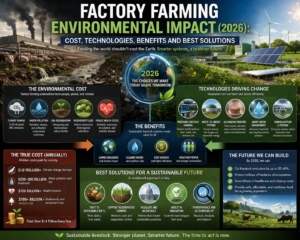
Recommended: Factory Farming Environmental Impact (2026): Cost, Technologies, Benefits and Best Solutions.
Positive Impacts of Sustainable Farming
Not all farming is bad.
Sustainable agriculture practices can actually reduce environmental harm and even restore ecosystems.
Examples include:
- Organic farming
- Crop rotation
- Agroforestry
- Precision agriculture
Benefits:
- Lower emissions
- Better soil health
- Reduced water usage
- Increased biodiversity
Cost of Environmental Impact of Farming
Environmental Cost of Small Scale Farming
- Lower emissions but inefficient resource use
- Estimated hidden environmental costs: $50–$300 per acre/year
Industrial Agriculture Hidden Costs
Large scale farming has higher impact:
- Pollution cleanup costs
- Soil restoration expenses
- Carbon offset costs
👉 Estimated: $500–$2,000+ per acre annually (indirect costs)
Key Cost Factors
- Fertilizers and pesticides
- Water usage
- Fuel and machinery
- Land management
ROI of Sustainable Farming Practices
Sustainable methods can:
- Reduce long-term costs
- Increase yields
- Improve soil health
👉 ROI timeline: 2–5 years depending on technology
How to Reduce the Environmental Impact of Farming
This is where real change happens.
For Farmers
- Use precision agriculture to reduce inputs
- Adopt regenerative practices
- Minimize chemical use
For Consumers
- Choose sustainably sourced food
- Reduce food waste
- Support local producers
Businesses
- Invest in sustainable supply chains
- Reduce environmental footprint
- Improve transparency
Technologies and Solutions to Reduce the Environmental Impact of Farming
Precision Agriculture Technologies
- GPS guided equipment
- Data-driven farming
- Reduced input waste
Regenerative Farming Systems
- Soil restoration
- Carbon sequestration
- Crop rotation
Organic and Low Input Farming
- Eliminates synthetic chemicals
- Improves ecosystem balance
AgriTech Innovations (AI, IoT, Vertical Farming)
- Smart sensors
- Automated irrigation
- Indoor farming systems
Best Farming Solutions, Technologies and Companies
| Solution | Best For | Cost | Efficiency | Application |
|---|---|---|---|---|
| Precision Agriculture | Large farms | High | Very High | Crop optimization |
| Regenerative Farming | Sustainability | Medium | High | Soil recovery |
| Vertical Farming | Urban areas | Very High | High | Controlled environments |
| Smart Irrigation | Water savings | Medium | High | Water management |
| Organic Farming | Premium markets | Medium | Medium | Eco-friendly products |
1. Precision Agriculture Systems
Best For: Large scale commercial farms
Key Features
- GPS tracking
- AI analytics
- Automated machinery
Advantages and Disadvantages
- Maximizes efficiency
-High upfront cost
Estimated Cost: $15,000 – $100,000+ depending on scale
Regenerative Agriculture
Best For:Small to medium-sized farms, sustainability-focused operations
Key Features
- Cover cropping
- No-till farming
- Crop rotation
- Compost and natural fertilizers
Advantages and Disadvantages
- Improves soil health long-term
- Reduces chemical dependency
- Can generate carbon credits
- Requires transition time
- Lower short-term yields
Estimated Cost: $50 – $300 per acre (transition phase
Vertical Farming Systems
Best For: Urban farming, high value crops, controlled environments
Key Features
- Indoor stacked growing systems
- LED lighting
- Hydroponics / aeroponics
- Climate control systems
Advantages and Disadvantages
- Uses up to 90% less water
- Year-round production
- No pesticides required
- Very high energy consumption
- Expensive setup
Estimated Cost:$100,000 – $1M+ depending on scale
Smart Irrigation Technologies
Best For: Water-scarce regions, efficiency focused farms
Key Features
- Soil moisture sensors
- Automated irrigation
- Weather based adjustments
- IoT integration
Advantages and Disadvantages
- Reduces water waste significantly
- Improves crop consistency
- Fast ROI
- Requires technical setup
- Initial investment needed
Estimated Cost:$2,000 – $20,000+
Organic Farming Solutions
Best For:Premium markets, eco conscious production
Key Features
- Higher product pricing
- Strong consumer demand
- Lower chemical costs
- Certification required
- Higher labor demand
Advantages and Disadvantages
- Maximizes efficiency
– High upfront cost
Estimated Cost:$500 – $2,000/year (certification + transition)
Applications of Sustainable Farming by Industry
- Food Production Industry: Improves yield quality and sustainability
- Energy and Biofuels Sector: Supports renewable energy production
- Environmental Restoration Projects: Used for ecosystem recovery
Benefits of Reducing the Environmental Impact of Farming
Environmental Benefits
- Lower emissions
- Better biodiversity
- Soil restoration
Economic Benefits
- Cost savings over time
- Access to premium markets
- Government incentives
Regulatory and Compliance Advantages
- Avoid penalties
- Meet international standards
Challenges and Limitations
Technical Challenges
- Complex implementation
- Technology barriers
Financial Barriers
- High upfront investment
Regulatory Issues
- Policy differences by country
How to Choose the Right Farming Solution
Based on Budget
- Low: organic or regenerative
- High: precision agriculture
Based on Scale
- Small farms: low tech solutions
- Industrial farms: automation
On Sustainability Goals
- Carbon reduction
- Water conservation
- Soil restoration
Conclusion
The environmental impact of farming is complex—but impossible to ignore.
From climate change to biodiversity loss, agriculture plays a central role in shaping the future of the planet.
The good news?
Solutions already exist—and adoption is growing.
The real question is not whether farming impacts the environment, but how quickly we can transform it into a sustainable system.
FAQs
What is the biggest environmental impact of farming?
The largest impact is greenhouse gas emissions, followed closely by land use and water consumption.
How does farming affect climate change?
Farming releases methane, nitrous oxide, and carbon dioxide, all of which contribute to global warming.
Why is agriculture harmful to biodiversity?
It destroys habitats, uses pesticides, and promotes monoculture, all of which reduce species diversity.
Can farming be environmentally friendly?
Yes. Sustainable and regenerative farming practices can significantly reduce environmental damage.