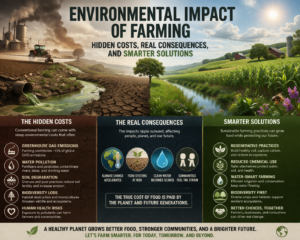
Factory farming is one of the most profitable food production systems in the world but also one of the most environmentally expensive. From greenhouse gas emissions to water pollution and deforestation, its hidden costs are reshaping global economies, regulations, and investment trends.
What is Factory Farming Environmental Impact and Why It Matters Today
Definition and Core Concept
Factory farming environmental impact refers to the total ecological and economic damage caused by industrial livestock production systems. These operations are designed for efficiency and scale, often housing thousands or millions of animals in confined environments.
The impact goes beyond visible pollution. It includes:
- Greenhouse gas emissions (methane, CO₂)
- Water contamination from animal waste
- Soil degradation
- Massive land use for feed production
This makes factory farming one of the largest contributors to environmental degradation globally.
Why Businesses and Governments Are Investing in Sustainable Alternatives
Governments and corporations are now investing billions into sustainable food systems. Why?
Because the true cost of factory farming is no longer externalized.
Key drivers include:
- Carbon pricing regulations
- ESG (Environmental, Social, Governance) investing
- Rising consumer demand for sustainable products
- Supply chain risk (water scarcity, land degradation)
Reducing environmental impact is no longer optional it’s a financial and regulatory necessity.
How Factory Farming Affects the Environment
Key Processes Behind Environmental Damage
Factory farming impacts the environment through several interconnected systems
1. Animal Digestion (Methane Emissions)
Livestock especially cattle produce methane, a greenhouse gas over 25x more potent than CO₂.
2. Manure Management
Large scale farms generate massive waste lagoons, which:
- Leak into groundwater
- Release ammonia and nitrous oxide
3. Feed Production
Industrial livestock depends on crops like soy and corn, leading to:
- Deforestation
- Monoculture farming
- Heavy pesticide use
Real World Example of Environmental Impact
In large scale livestock operations, thousands of animals produce more waste than entire cities. Without proper treatment systems, this waste contaminates rivers, destroys ecosystems, and contributes to air pollution.
This is why industrial agriculture is increasingly regulated in developed markets.
Types of Environmental Impacts Caused by Factory Farming
Greenhouse Gas Emissions and Climate Change
Factory farming contributes significantly to climate change through:
- Methane (livestock digestion)
- Nitrous oxide (fertilizers and manure)
- CO₂ (deforestation and transport)
Water Pollution and Waste Runoff
Animal waste often enters water systems, causing:
- Algal blooms
- Oxygen depletion (dead zones)
- Drinking water contamination
This creates both environmental and public health costs.
Deforestation and Land Use Change
Large areas of forest are cleared to grow animal feed. This leads to:
- Loss of carbon sinks
- Habitat destruction
- Increased global warming
Cost of Factory Farming Environmental Impact
Environmental Cost for Small Scale vs Industrial Operations
- Small-scale farms: lower impact but less efficient
- Industrial farms: high efficiency, but massive externalized costs
Global Economic Cost
The real cost of factory farming includes:
- Climate damage
- Healthcare costs from pollution
- Ecosystem collapse
👉 Estimates suggest trillions of dollars annually when externalities are included.
Key Cost Factors
- Emissions (carbon pricing impact)
- Water use and contamination
- Land degradation and restoration
- Waste management
ROI of Sustainable Alternatives
Switching to sustainable systems can generate ROI through:
- Lower regulatory risk
- Premium pricing (eco products)
- Energy generation (biogas)
👉 Sustainability is becoming a profit driver, not just a cost.
Best Solutions to Reduce Factory Farming Environmental Impact
| Solution | Best For | Cost | Efficiency | Application |
|---|---|---|---|---|
| Sustainable livestock systems | Farms | Medium | High | Agriculture |
| Alternative proteins | Food industry | High | Very High | Consumer markets |
| Biogas systems | Large farms | Medium-High | High | Energy + waste |
| Regenerative agriculture | Land recovery | Medium | High | Soil restoration |
1. Sustainable Livestock Systems
Best For: Farms transitioning from industrial to ethical models
Key Features
- Lower animal density
- Better waste control
- Reduced emissions
Advantages and Disadvantages
✔ Lower environmental impact
❌ Higher operational costs
Estimated Cost
$500K–$5M depending on scale
2. Alternative Proteins
Best For: Food companies and investors
Key Features
- No livestock emissions
- Lower land and water use
Advantages and Disadvantages
✔ Extremely scalable
❌ High initial investment
Estimated Cost: Millions in R&D and production
3. Waste Management and Biogas Systems
Best For: Large scale farms
Key Features
- Converts waste into energy
- Reduces methane emissions
Advantages and Disadvantages
✔ Generates revenue
❌ High installation cost
Estimated Cost: $1M–$10M
4. Regenerative Agriculture Practices
Best For: long term sustainability
Key Features
- Soil restoration
- Carbon sequestration
Advantages and Disadvantages
✔ Improves ecosystem health
❌ Slower ROI
Estimated Cost: Moderate (varies by land size)
Applications of Solutions by Industry
- Food Production Industry
- Adoption of alternative proteins and sustainable sourcing
- Energy Sector
- Biogas systems converting waste into electricity
- Agriculture and Land Management
- Regenerative practices improving soil health
- Environmental Projects
- Reforestation and ecosystem restoration
Benefits of Reducing Factory Farming Environmental Impact
Environmental Benefits
- Lower emissions
- Cleaner water systems
- Biodiversity protection
Economic Benefits
- Reduced long-term costs
- New revenue streams
- Increased efficiency
Regulatory and Compliance Advantages
- Easier compliance
- Access to green funding
- Reduced legal risks
Challenges and Limitations
Technical Challenges
- Scaling sustainable technologies
- Infrastructure limitations
Financial Barriers
- High upfront costs
- Long ROI periods
Policy and Regulatory Issues
- Lack of global standardization
- Inconsistent enforcement
How to Choose the Right Solution
Based on Budget
Low budget → regenerative practices
High budget → tech-based systems
Based on Scale
Small farms vs industrial operations
Sustainability Goals
Carbon reduction vs full ecosystem recovery
Frequently Asked Questions (FAQ)
How much does factory farming impact the environment cost globally?
It costs trillions annually when environmental and health impacts are included.
Is factory farming environmentally sustainable?
No, in its current form it is considered unsustainable.
What is the best solution available?
A combination of alternative proteins and sustainable farming practices.
What are the main benefits?
Lower emissions, cost savings, and regulatory advantages.
Is Reducing Factory Farming Impact a Good Investment?
- Best Option for Low Budget: Regenerative agriculture
- Best Option for Large Projects: Biogas and waste management systems
- Most Efficient Solution Overall: Alternative proteins